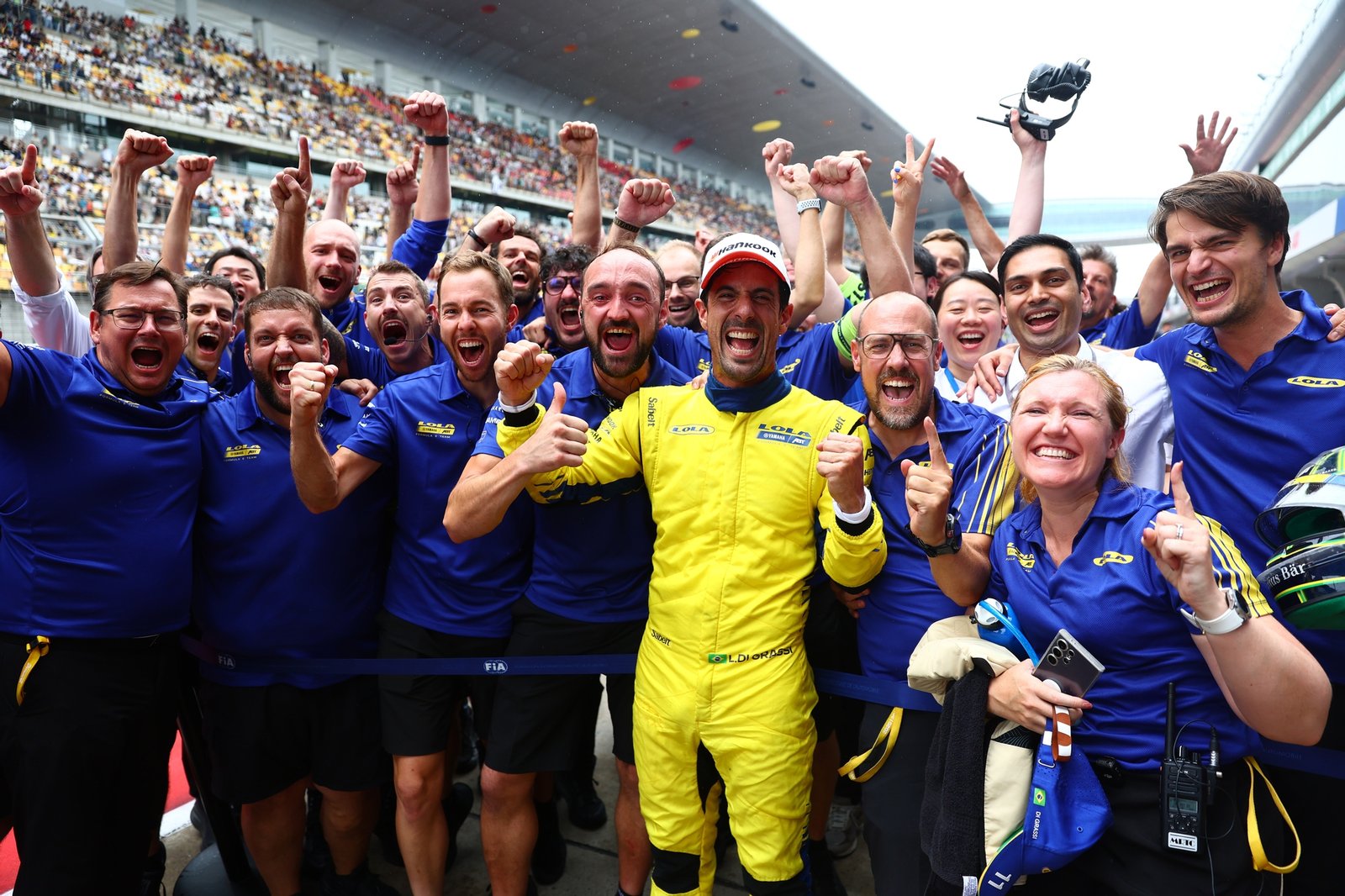
Lucas di Grassi started Round 13 of the 2026 Formula E season eighteenth on the grid. He finished it on the top step, four races before he’s due to walk away from the sport for good.
Di Grassi is 41. He won Formula E’s very first race, back in 2014, on the same patch of Chinese tarmac. Twelve years and thirteen wins later, he arrived in Shanghai as a driver counting down his final months, not chasing trophies. His Lola Yamaha ABT squad had yet to win a race under the Lola name. Their car had shown flashes of pace all season, nothing more. Then the rain came, and everything the team had been quietly building paid off in the space of twenty-eight laps.
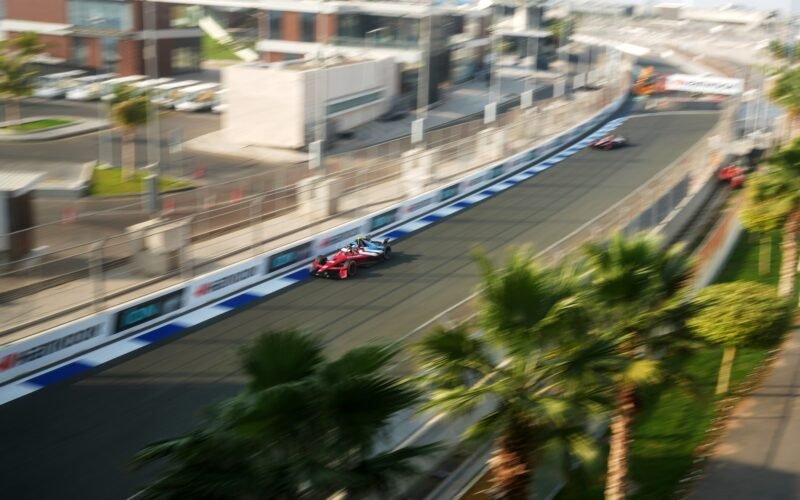
The Shanghai E-Prix opened wet and stayed unpredictable, the kind of race where setup choices made before the lights go out end up deciding the result more than anything a driver does with the wheel. Di Grassi and his engineers took a bold call on car setup at the start, betting the track would dry out faster and in a different way than most of the grid expected. Starting from eighteenth gave them little to lose.
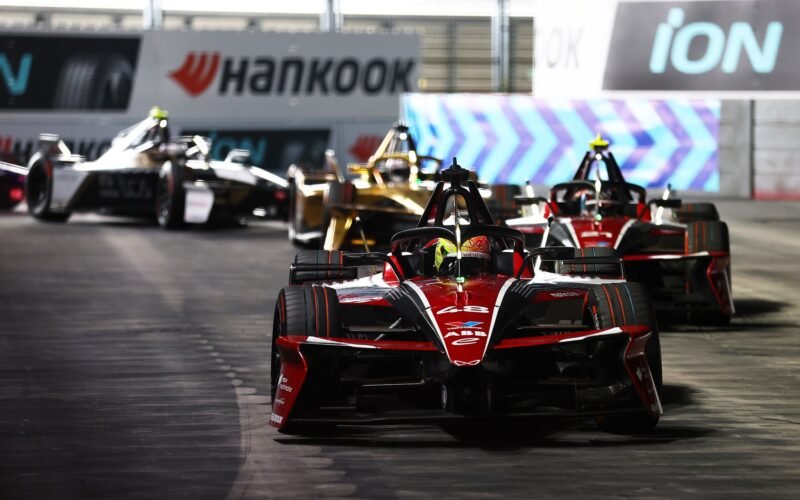
The bet worked. As the surface dried, di Grassi’s Lola came alive while cars ahead of him struggled for grip. He sliced through the field lap after lap, climbing sixteen places by the time the race reached its final laps, right alongside two other drivers who’d made the same read on conditions: Jean-Eric Vergne and Joel Eriksson.
The turning point arrived with a Full Course Yellow on lap 24, triggered when di Grassi’s own teammate, Zane Maloney, stopped on track with a suspension failure. Caution periods usually level a field out. This one did the opposite. Eriksson and Vergne had already burned through their ATTACK MODE activations, the temporary power boosts that briefly transform a Formula E car’s speed. Di Grassi hadn’t. He still had his final dose of 50kW, all-wheel-drive boost sitting in reserve, and the yellow flag handed it back to him at exactly the moment it mattered most.
When the FCY ended, di Grassi deployed it. He passed Eriksson at the hairpin on the penultimate lap. Then, through Turn 1 on the final lap, he went around the outside of Vergne and took the lead for the first time all race. He held it to the flag, denying a driver who’d been chasing him for the better part of a decade.
Call it fortune, and you’re not wrong. The FCY timing was outside anyone’s control, and Maloney’s misfortune became di Grassi’s opening. But strip away the luck and there’s a harder truth underneath: none of it works without the setup gamble that got him into position in the first place, or the discipline to hold his attack mode in reserve while two faster-looking rivals burned theirs early. Di Grassi didn’t just get lucky. He put himself where luck could find him.
That’s the shape of most “miracle” results in motorsport. The parts a driver controls, decided well in advance, meeting the parts nobody controls, decided by a stalled car and a badly timed yellow flag.
For Lola Yamaha ABT, this was the team’s first win under the Lola brand, a genuine landmark for a manufacturer programme still finding its feet. For di Grassi personally, it closed a loop that started in Beijing twelve years earlier: the first winner in Formula E history, taking what he’s called one of his last wins in the same country where his career in the series began. He’s now the series’ oldest race winner, a record that isn’t likely to fall soon given how few drivers race competitively into their forties.
Further back, the result reshuffled the title picture without di Grassi having anything to do with it. Championship leader Mitch Evans never made the start, sidelined by a technical problem before the green flag, while Pascal Wehrlein came home fourth and inherited the points lead. A race di Grassi won had nothing to do with the championship fight, and everything to do with it.
None of that changes what happened at Turn 1 on the final lap. A driver in the twilight of his career, starting from the back, read a changing track better than anyone else on it, then had the nerve and the energy in hand to finish the job. Miracle is a strong word. In Shanghai, it was also the right one.