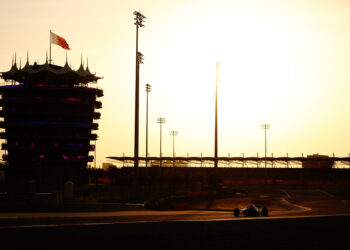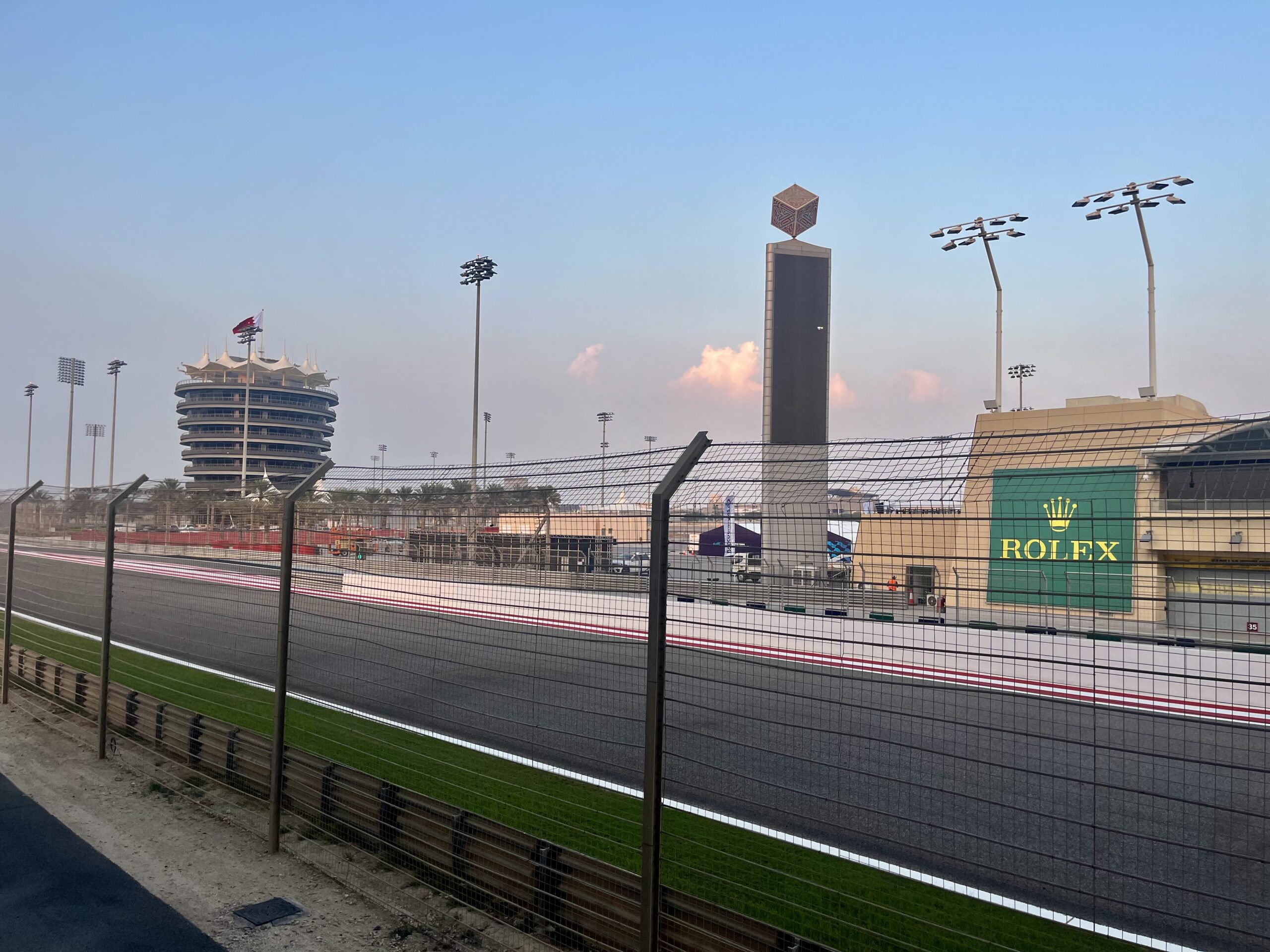
After six days of official testing across two three-day windows at the Bahrain International Circuit, the paddock has spoken, the data has been gathered, and we have enough of a picture to start building a genuine pre-season power ranking. Here is where every team stands, from the front of the grid to the very back, ahead of the Australian Grand Prix on March 8.
Testing is a notoriously unreliable oracle. Fuel loads, tyre compounds, engine modes and deliberate sand-bagging make lap time comparisons between teams nearly meaningless in isolation. What pre-season testing does offer, however, is something arguably more valuable: a window into reliability, programme completion, car balance and, crucially, trajectory. Which teams left Bahrain smiling, and which left Sakhir with a pit in their stomach?
The 2026 regulations represent the most significant overhaul Formula 1 has seen in years, introducing near-equal contributions from the internal combustion engine and the MGU-K, entirely new chassis rules and a completely fresh era for power unit suppliers. The chaos that inevitably accompanies such sweeping changes has played out on track in real time over the past two weeks, and the gaps between the elite and the rest, both at the front and at the back, appear eye-catching.
Here is how every team ranks after the final Bahrain test.
1. Ferrari
If there is one team that should be most satisfied walking out of Bahrain for the final time, it is Ferrari. The SF-26 has been the most complete package across pre-season, combining reliability with genuine outright pace and impressive race simulation runs. Charles Leclerc ended the final day as the only driver to break the 1:32 barrier across all of pre-season testing, setting a 1:31.992s to top the timesheets by nearly nine tenths of a second, and his long-run data from the closing stages of Friday were arguably more compelling than the headline number.
Ferrari brought upgrades to the second Bahrain test, with a novel mini-wing added behind the exhaust generating further interest, and the SF-26 looked settled, balanced and easy to drive on its longer stints. Lewis Hamilton’s day two was disrupted by a technical issue and the curious appearance of an upside-down active rear wing on the main straight raised eyebrows, but these were largely footnotes against an otherwise clean testing narrative. Hamilton’s practice starts, meanwhile, were described as genuinely stunning by multiple observers, highlighting another potential edge this team has unlocked.
Ferrari are not hiding as much as their rivals suggest. The race simulations were the most consistently impressive of any top four team, and Frédéric Vasseur’s calm insistence that the season will be won through development rings true, though it also feels like a team that believes they have the tools to fight from day one. The SF-26 is the car I would most want to be driving into Melbourne right now.
2. Mercedes
Mercedes topped the timesheets on both of the first two days of the second test, with George Russell on day one and Kimi Antonelli on day two, and the W17 has consistently looked the most refined and composed car through the corners when observed trackside. The Silver Arrows looked neat, tidy and, perhaps most tellingly, never appeared to be at the limit. The absence of any genuine performance runs from Mercedes this week has set every rival talking, with Ferrari openly suggesting their Brackley rivals are hiding something significant.
Antonelli’s pneumatic failure in the Friday morning session was the one concern, costing him track time on the final day, though the Italian recovered to run in the afternoon. The underlying pace of this car, particularly in its composure through the medium-speed corners and its relatively untaxed appearance at low fuel, is hard to ignore.
Mercedes are almost certainly sandbagging to some degree, whether to deflect pressure from the ongoing compression ratio controversy or simply because they have not needed to show their hand. Antonelli is a genuine talent and Russell’s racecraft is world class. This is a championship-capable outfit that has chosen not to show it yet. Consider me suspicious, and in this case, suspicion points upward rather than down.
3. Red Bull
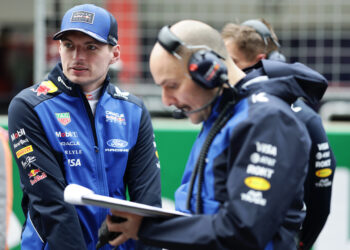
Red Bull’s new Ford-powered unit has been the talk of the paddock since Barcelona, and with good reason. The power unit’s ability to deploy energy aggressively on the straights drew gasps from rival engineers throughout the first Bahrain test, and Max Verstappen’s smooth, measured running across both test windows underlined why he remains the benchmark driver in the sport. Verstappen completed a remarkable 139 laps on day two of the second test alone, methodically working through a full race simulation programme.
Isack Hadjar, however, has had a considerably bumpier ride. Coolant circuit issues restricted him to just 13 laps in the first morning of the second test, and the Frenchman also had moments on track where the car looked less settled under him than it did under his team-mate. This is expected in testing, but the contrast was stark. Red Bull themselves are among those playing the game of insisting others are faster, but the energy deployment visible at the end of the straights does not lie.
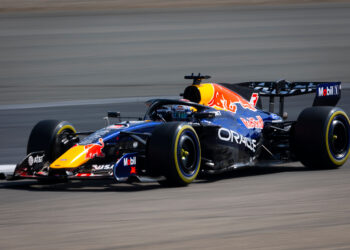
Red Bull have a strong platform, an outstanding driver in Verstappen and what appears to be a class-leading power unit from their new in-house partnership with Ford. A genuine title contender, though whether the RB22 is fast enough in the corners to match what Ferrari appear to have found in their race runs is something we will only truly know in Melbourne.
4. McLaren
The reigning constructors’ champions have had the least tidy of the four frontrunning teams across both Bahrain tests. McLaren arrived in Sakhir chasing the form they showed in Barcelona, but the opening days of both tests were disrupted by minor issues, and Lando Norris spent significant chunks of Friday’s afternoon in the garage before finally getting some representative running in. Oscar Piastri has been the more consistent performer across the week, running closely with Antonelli on day two to suggest the MCL40’s ceiling is genuinely high.
The team made what was described as a significant step on the final day in terms of understanding the car, which is encouraging, but the fact that the reigning champions are only now beginning to feel at home in their machinery, with the season less than three weeks away, is not ideal. Norris finished 0.879 seconds behind Leclerc on the final day, a gap that needs context, but one that will not have been welcomed in the Woking debrief.
McLaren are dangerous precisely because they have shown they can improve rapidly and they have the infrastructure and driver quality to compensate for a slower start. I do not believe for a moment they are as far off as Friday’s raw times suggest. But there is a nagging feeling that Ferrari and Mercedes have a slightly more settled package heading into round one. McLaren will be in the fight, but may need a race or two to fully find their feet in the new era.
5. Haas
This column does not hand out praise lightly, but Haas deserve enormous credit for what they have put together for 2026. The VF-26, running Ferrari power, has been the most impressive midfield package by a considerable margin. Both Esteban Ocon and Oliver Bearman accumulated strong mileage throughout both tests, the car looked balanced and composed at the trackside observers’ eye level, and the pace shown in the closing performance runs of Friday was genuinely competitive.
Bearman, in particular, has impressed. The young Brit summed it up well himself, calling the test the team’s most productive to date and praising the steps the team has made through the pre-season. The Ferrari engine, already looking strong in the works car, appears to be giving the Haas a meaningful power advantage over some of its midfield rivals.
Haas are the team I am most excited to watch in the midfield battle. The combination of Ferrari power, solid aerodynamics and two hungry drivers creates a genuinely intriguing package. Whether the car holds up over a race distance under the pressure of a tight midfield scrap remains to be seen, but on the evidence of Bahrain, Haas should be fighting for points every single weekend.
6. Alpine
Alpine have been steady across both Bahrain test windows without ever truly threatening to break out and make a statement. Pierre Gasly has been the team’s lead performer and his pace relative to team-mate Franco Colapinto has been encouraging, with the Frenchman showing well in the midfield pecking order throughout the week. The team racked up reasonable mileage, though Gasly’s precautionary stop during the first Bahrain test, when an anomaly was spotted in the data, was a minor concern.
The A526 is a competent piece of engineering using the Mercedes power unit, which, if the talk in the paddock is to be believed, is quite possibly the strongest unit in the field. That is a meaningful advantage in a new regulations cycle.
Alpine should be competitive in the midfield but I see no evidence yet that they are capable of consistently outscoring Haas. The car does not look as naturally settled through the corners as the Haas, and Colapinto’s pace relative to Gasly needs to improve significantly. A team in the mix for points, but fighting to stay in the top six of the midfield rather than dominating it.
7. Racing Bulls
The junior Red Bull outfit has the dual advantage of Red Bull’s impressive Ford power unit and a driver pairing in Liam Lawson and Arvid Lindblad that has potential at different stages of their careers. The car, however, has shown a tendency to be unpredictable, particularly in the transition zones and on corner entry, where a lack of expected grip has caught drivers out on multiple occasions. Lawson ran wide in the fast sweepers on one occasion due to rear instability, a sign that the car’s energy management behaviour is still creating dynamic challenges.
The mileage accumulated was solid across both tests, and the pace is within touching distance of the teams immediately above them.
Racing Bulls are a difficult team to call. The power unit is a genuine asset, but the erratic handling observed trackside is a concern that goes beyond driver familiarity. If the team can stabilise the car’s behaviour through the opening rounds, they could be in the fight for consistent points. But they look a step below Haas and Alpine at present.
8. Williams
Williams’ pre-season story has been one of relentless miles, designed to compensate for the production delays that forced them to miss the Barcelona Shakedown entirely. The team succeeded in accumulating huge lap tallies across both Bahrain tests, topping the mileage charts at the first test, and boss James Vowles was candid about the situation, admitting the team were “on the back foot” while outlining an aggressive development programme to extract more from the car.
The problem is that mileage only counts for so much. Trackside observers noted that the FW48 does not look particularly comfortable on track, with the car appearing stiffer than ideal and grip suffering as a result. The race simulation pace in the first test was notably slower than Haas and Alpine, and Carlos Sainz’s best laps were roughly 1.6 seconds off the front-runners.
Williams finished fifth in the constructors’ championship last year and that looks like a ceiling rather than a floor at the moment. The team has the tools and the intent to develop aggressively, but the car does not look like a top-five package on current evidence. Points will come, but the optimism of last year’s campaign feels harder to sustain right now.
9. Audi
Audi’s arrival as a works power unit entrant has been one of the most anticipated storylines of this new era, but expectations have been carefully managed throughout pre-season. The C45 had genuine moments of instability under braking during the early days of the Bahrain tests, with both Nico Hulkenberg and Gabriel Bortoleto visibly wrestling with the demands of downshifting to ultra-low gears under the new regulations, creating turn-in instability at times.
However, the car improved meaningfully as the test progressed. Hulkenberg’s pace on day two of the second test was respectable enough to suggest the team have a workable midfield package, and the engine, while clearly not yet at the level of Mercedes or Red Bull Ford, appears solid enough to avoid catastrophic reliability problems in the early races.
Audi are exactly where you would expect a new power unit manufacturer to be at this stage of their journey. The car is not quick enough to challenge for points on a regular basis yet, but the foundations look more solid than Aston Martin’s, and crucially, the reliability picture gives them a base to develop from. Progress will come, though probably not in time to avoid some difficult weekends early in the season.
10. Cadillac
Formula 1’s newest team deserves credit simply for being here and for putting together a car that was presentable enough to run in Bahrain without falling apart. Cadillac completed over 1,700 kilometres during the first Bahrain test, more than Alpine, Mercedes and Aston Martin, and the pair of Sergio Perez and Valtteri Bottas have been calm and measured in their assessment of where the team is.
The second test was tougher, with sensor issues and telemetry problems limiting mileage on both days, and Perez and Bottas were never seriously threatening the midfield in terms of outright pace. The car sits around 2.5 to 3.5 seconds off the frontrunners, which was always going to be the reality for a brand new operation.
Cadillac are fighting Aston Martin for last place rather than fighting the midfield, but unlike Aston Martin, their problems appear to be ones of pace rather than catastrophic mechanical failure. For a startup team in year one, they have done enough to suggest the project has genuine foundations. Year two looks more interesting than year one.
11. Aston Martin
There is no polite way to say this: Aston Martin’s 2026 pre-season has been a disaster. The Silverstone-based outfit arrived late to the Barcelona Shakedown, arrived underprepared to the first Bahrain test and then experienced escalating failures across the second test that culminated in the team packing up on Friday afternoon having completed just six laps across the entire final day of pre-season testing.
The problems are multiple and intertwined. The new Honda power unit, making its debut as a works supply in this partnership, has suffered from battery failures, coolant issues and data anomalies throughout. Fernando Alonso was stranded on track on Thursday afternoon during a race simulation, with Honda subsequently confirming battery-related issues and revealing they had a shortage of spare parts. Lance Stroll, meanwhile, has had a difficult week in and out of the car, with the car showing a tendency to catch drivers out that seems to go beyond driver error. Chief trackside officer Mike Krack admitted weeks ago that the team knew they were missing pace, and Stroll himself put the deficit at four to four-and-a-half seconds to the front-runners, a staggering gap.
The gearbox, reportedly Aston Martin’s first in-house unit, has attracted concerned murmuring in the paddock, with reports suggesting it may struggle to cope with the torque demands of the new regulations requiring constant high-revving to recover electrical energy. Some expert assessments have suggested fixing the gearbox could take up to six months, which would effectively write off the first half of the season.
Adrian Newey’s presence remains the great hope. Nobody in Formula 1 history has a track record to match his, and the AMR26’s aggressive aerodynamic concept suggests an ambitious and uncompromising design philosophy. But as Pedro de la Rosa acknowledged trackside, the chassis and the power unit must work together, and right now, they are not. Newey can fix the aerodynamics, but he cannot fix Honda’s engine from his drawing board at Silverstone.
Aston Martin face the genuine prospect of not finishing a race in Melbourne. That is not hyperbole, it is the logical conclusion of a team that has completed only a fraction of the mileage of its rivals, still does not have a reliable engine, and is running a power unit that Honda are currently testing on a bench in Sakura, Japan, rather than in a car in Bahrain. The long-term project under Newey remains fascinating, and the team’s resources are substantial. But the short term is going to be painful, and the first few races of 2026 may be something Alonso and Stroll simply want to survive rather than race.
The 2026 regulations were supposed to be the great leveller. To some extent they have been, with every team, including the dominant McLaren of 2025, returning to a form of square one. But what pre-season testing has confirmed is that the structural advantages of the most resourced and experienced operations in the paddock do not disappear simply because the rules change.
Ferrari, Mercedes, Red Bull and McLaren remain in a class of their own. The question of their exact order heading into Melbourne is genuinely unresolved in a way it has not been for some years, and that is the most exciting takeaway from six days of pre-season testing in the Bahraini desert. Any one of four teams could win the opening race, and any one of four teams could plausibly take the drivers’ and constructors’ titles in 2026.
The midfield has reshuffled, with Haas emerging as the most impressive midfield team by some margin and Williams needing to find more pace to justify last year’s fifth-place finish. Alpine are steady. Racing Bulls are erratic. Audi are building. Cadillac are learning. And Aston Martin are, at least for now, simply surviving.
The 2026 season begins on March 8 at Albert Park. Melbourne rarely produces the tidiest of races, and with new cars, new power units and drivers still learning the art of energy management in a new regulatory era, the chaos factor heading into Australia is higher than it has been for years.
I cannot wait.