
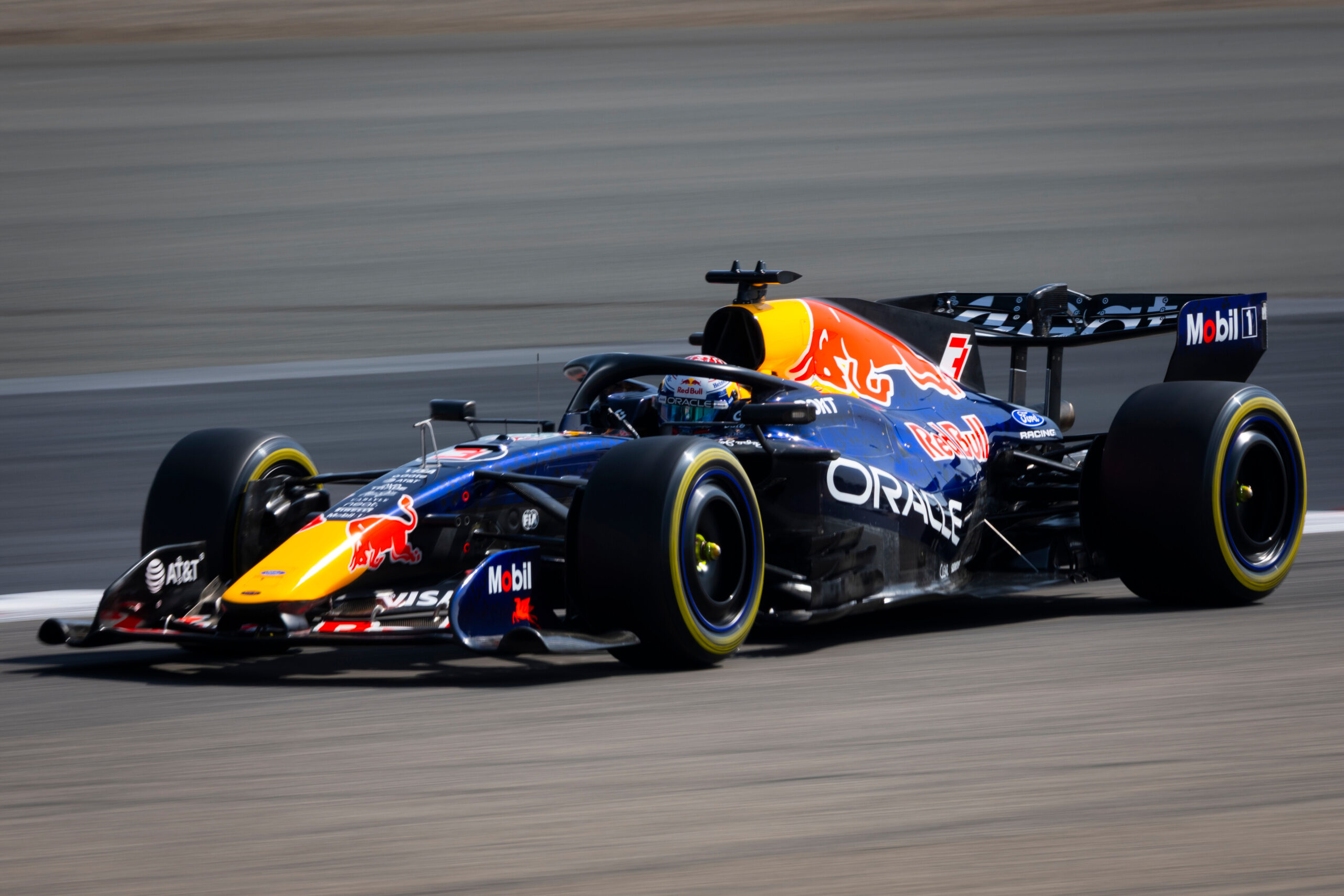
Two statements published by the FIA this week, one from the Formula 1 Commission, one from the Power Unit Advisory Committee, have set the paddock on fire before a single competitive lap of the new season has been run. Here is everything you need to know about what they mean and why they matter.
The most complicated start to a season?
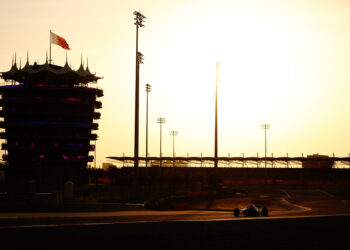
Formula 1 has reinvented itself many times. The turbo wars of the 1980s, the ground-effect era, the V10 screaming years, the hybrid revolution of 2014, each upheaval reshaped the sport in its own way. But what is happening right now, in the sweltering heat of the Bahrain International Circuit during pre-season testing, feels different. More uncertain. More charged.
The statements issued by the FIA on Tuesday crystallised what many in the paddock have been whispering since the cars first turned a wheel: this new era has arrived with problems that need solving, and solving fast. The first statement, from the Formula 1 Commission meeting chaired by FIA Single-Seater Director Nikolas Tombazis and FOM President Stefano Domenicali, confirmed that regulatory refinements had been agreed and sent to the World Motor Sport Council for approval. The second, from the Power Unit Advisory Committee, announced a vote among manufacturers on a proposed change to how engine compression ratios are measured, a vote sitting at the heart of the most politically explosive technical controversy in recent memory.
Between them, these two documents tell the story of a sport at a crossroads. The 2026 cars are genuinely exciting, smaller, lighter, and in some ways faster than anything that has come before. But they are also complicated in ways no one fully anticipated, and with Melbourne only three weeks away, the clock is ticking.
What Came Out Of The Commission Meeting?
Setting the Scene
The first Formula 1 Commission meeting of the year took place on Tuesday in Bahrain, running alongside the second pre-season test. It brought together the FIA, Formula One Management, and representatives from all eleven teams, the full cast of characters who collectively shape how this sport is run. On the agenda: the early feedback from testing, a raft of technical concerns raised by drivers and teams, and a handful of commercial questions that have been bubbling under the surface for months.
The headline from the official summary was that regulatory refinements had been agreed and referred upward for approval. But the more revealing part of what was published was what it chose not to do, namely, make any immediate, sweeping changes to the 2026 rules. The reasoning offered was careful and considered: the evidence is still immature, and rushing to fix things before anyone fully understands them risks making everything worse.
It is a defensible position. It is also one that will be tested severely over the next fortnight.
What Drivers Actually Think of the New Cars
Before the meeting, the FIA took the unusual step of circulating a formal survey among drivers, asking for honest reactions to the new machinery. The results, discussed in the Commission, painted a nuanced picture, broadly positive on some things, more complicated on others.
On the plus side, drivers genuinely like what has changed about the physical shape of the cars. They are noticeably smaller and lighter than their predecessors, and that translates into something tangible at the wheel, a nimbler, more responsive feel that several drivers described in almost nostalgic terms, as though the sport had rediscovered something it had quietly lost during the heavy, wide years. Ride quality was flagged as improved, and the initial acceleration out of corners, partly a product of the vastly uprated electric motor, drew positive comment.
But the driving itself? That is where it gets complicated.
The new power units split output roughly fifty-fifty between the combustion engine and the electric motor. On paper, that sounds thrilling. In practice, it means drivers must now actively manage their energy reserves in ways that cut against every instinct built up over a career. On long straights, many of them are lifting off the throttle and, stranger still, deliberately downshifting, not to brake, but to harvest kinetic energy back into the battery. At circuit entry points that previously demanded a clean, committed approach, some drivers are modulating their speed to ensure they arrive at the next sector with enough electrical charge to attack it.
The difference between a good and bad start last year was you got a bit of wheelspin or you had a bad reaction time. This year it could be like an F2 race where you almost go into anti-stall. You could lose six or seven spots if it goes wrong.
Oscar Piastri, McLaren
Oscar Piastri was as direct as anyone in describing the adjustment required. Fernando Alonso acknowledged the cognitive load openly, noting that thinking about energy has become as constant a part of driving as looking at the apex. Lewis Hamilton, in his first season with Ferrari, highlighted the particular challenge posed by circuits with long straights, the kind where, under the old rules, you simply pinned the throttle and let the engine do its job.
And then there was Max Verstappen, who rarely minces his words. The four-time champion, runner-up to Lando Norris in last year’s championship, called the new cars Formula E on steroids, a pointed comparison that captures a genuine unease about whether a formula this heavily centred on energy management is still the same sport it was twelve months ago. It is a question the rest of the season will have to answer.
No Immediate Changes – And Why That Actually Makes Sense
The Commission’s decision to hold off on any sweeping regulatory intervention drew an audible sigh from some quarters of the paddock, particularly from teams with specific safety concerns they wanted addressed now. But the reasoning, set out in the published statement, is harder to argue with than it might initially appear.
The cars have completed barely a handful of days of testing. Data is limited. The performance picture is murky. Different teams are running radically different energy deployment strategies, which makes it almost impossible to draw firm conclusions about where the real problems lie versus where teams are simply still finding their feet. Changing the rules based on incomplete evidence is how you create new problems while trying to solve old ones.
What the Commission did commit to was continued evaluation during this second Bahrain test, three more days of running that will generate the kind of data the FIA needs before making any calls. On at least one specific issue, the race start procedure, further testing of potential solutions was agreed to happen this week.
The Race Start Problem
How Did We Get Here?
To understand why race starts have become such a flashpoint, you need to go back to what was removed from the power unit for 2026. For twelve years, the MGU-H, the Motor Generator Unit Heat, was one of the defining components of a Formula 1 engine. Tucked between the turbocharger’s turbine and compressor, it did something seemingly mundane but actually rather brilliant: it kept the turbo spinning at optimal speed even when the engine was not under load. In plain terms, it eliminated turbo lag.
The decision to scrap it was driven by a combination of factors: cost, complexity, and a desire to make the new engine formula more accessible to incoming manufacturers like Audi and Red Bull Powertrains. In its place, the MGU-K was massively uprated, from 120 kilowatts to 350, giving it a far more central role in the car’s performance. On paper, this was a reasonable trade. In practice, one thing was not fully appreciated until drivers sat in these cars for the first time: the MGU-H had been quietly solving the race start problem for over a decade.
At a race start, the engine is stationary. The turbocharger is cold. Without the MGU-H to spin it up instantly, drivers now face a window of several seconds after engaging gear in which the turbo is not producing meaningful boost, and therefore the engine is not producing meaningful power. Get the timing wrong, and instead of a clean launch, you get a stuttering, underpowered mess. At worst, you get an anti-stall situation.
Ten Seconds on a Knife Edge
The solution the teams have developed is to rev the engine at high RPM for an extended period before the lights go out, to build boost pressure before the clutch is released. Estimates from the paddock suggest somewhere between ten and fifteen seconds of this, depending on how large a turbocharger the manufacturer in question has fitted. The window for executing a perfect start within that constraint is, by several drivers’ accounts, tiny.
Haas driver Ollie Bearman described the timing as being on a knife-edge, with milliseconds separating a good launch from disaster. Piastri went further, noting that what was previously a recoverable error, a bit of wheelspin, a fractionally slow reaction, could now cost a driver six or seven positions if it goes wrong.
During the start procedure practice at the first Bahrain test, Alpine’s Franco Colapinto came uncomfortably close to spinning before he had even reached his grid slot. The combination of maintaining high revs while simultaneously warming rear tyres and managing the car’s balance in confined grid box conditions is a genuinely new and demanding physical challenge.
Andrea Stella, McLaren’s team principal, was the most vocal in raising this as a safety issue ahead of the Commission meeting. His argument was not primarily about competitive fairness; it was simpler and harder to dismiss than that. Cars behaving unpredictably at race starts, in close proximity to each other, is dangerous.
The Ferrari Complication
Any straightforward push for a fix ran into an obstacle almost immediately: Ferrari did not particularly want one.
The Scuderia, it emerged, had seen this problem coming. During the design process for their 2026 power unit, Ferrari reportedly raised the MGU-H removal issue formally with the FIA and received confirmation that the start procedure would remain unchanged. Their response was to design a smaller turbocharger, one that takes less time to spool up, and therefore creates a shorter and more manageable pre-start window.
That engineering decision, validated by testing, now gives Ferrari a material advantage at race starts compared to rivals with larger turbos. Asking them to support a regulatory change that neutralises that advantage is asking them to be penalised for good preparation. Unsurprisingly, Ferrari’s position, reportedly one of dissent in pre-Commission discussions, was that the rules were clear, their engineers read them correctly, and changing them retrospectively is not how the sport should operate.
Fred Vasseur, as is his way, was measured in public. He spoke about the importance of clarity without directly opposing change or endorsing the status quo. The subtext was easy to read.
The Commission meeting confirmed that modifications to the start procedure would be evaluated during this week’s Bahrain test. Whether a workable solution can be implemented before the Australian Grand Prix remains, as of now, genuinely open.
The Compression Ratio Row
What the Power Unit Advisory Committee Actually Said
The second statement issued by the FIA on Tuesday was shorter, more technical, and in some ways more politically significant than the Commission summary. It announced the launch of a formal vote among the five power unit manufacturers: Mercedes, Ferrari, Honda, Red Bull Powertrains, and Audi, on a proposed change to how the engine compression ratio is checked for compliance.
The proposal itself is straightforward enough in principle. At the moment, compliance with the compression ratio limit is verified through a static test carried out at ambient temperature, essentially, room temperature. What the FIA is now proposing is that, from the 1st of August, compliance must also be demonstrated at a representative operating temperature of 130 degrees Celsius. The reasoning is simple: engines run hot, materials expand when heated, and an engine that meets the limit when cold may exceed it when running at full temperature on track.
The FIA’s statement described the methodology as something developed collaboratively with the manufacturers over recent weeks and months. A vote outcome is expected within ten days. As with everything in Formula 1 right now, World Motor Sport Council approval will be required before any change takes effect.
The Winter That Started This
To understand why a seemingly dry procedural question has generated such heat, you need to go back to the months before anyone turned a wheel in anger. The 2026 regulations reduced the maximum permitted compression ratio from 18:1 to 16:1, a deliberate step intended to give incoming manufacturers a more accessible target and to level the playing field after years of the established suppliers extracting every marginal gain available.
The regulations stipulate that this limit is assessed at ambient temperature. They always have. What no one apparently considered sufficiently carefully is what happens when the engine heats up. Aluminium components expand significantly under thermal load. An engine sitting at 16:1 at room temperature may be operating at something considerably higher, potentially approaching the old 18:1 limit, by the time it is running flat out on a hot circuit.
Ferrari, Audi, and Honda reportedly noticed this discrepancy during the autumn, and in January, they sent a joint letter to the FIA seeking clarification. An initial technical meeting took place. The FIA’s position, as it stood, was that the regulations only required ambient measurement, a position that happened to be advantageous to Mercedes and Red Bull Powertrains, who had apparently identified and exploited the opportunity during their design process.
The Battle Lines
The controversy split the paddock along manufacturer lines with a clarity that makes the occasional diplomatic language of official statements look almost farcical.
On one side: Mercedes and the three teams running their power unit, McLaren, Alpine, and Williams. Their position is that their engineers did exactly what good engineering departments do. They read the regulations carefully, found an interpretation consistent with the written text, and built accordingly. Changing the rules after the fact would be, in Toto Wolff’s memorable phrase, telling them to “just get their s*** together” when they had already done precisely that.
We don’t want to have controversies. We want people to be competing on the track, not in the courtroom or in the stewards’ room.
Nikolas Tombazis, FIA single-seater director
On the other side: Ferrari, Honda, Red Bull Power Trains and Audi. Their argument is that the spirit of the regulation is clear, that a 16:1 compression ratio means 16:1 in running conditions, not just at rest, and that allowing otherwise is rewarding a technicality over intent.
Red Bull Powertrains’ position adds a further wrinkle. Ben Hodgkinson, their engine chief, initially dismissed the controversy as a lot of noise about nothing, aligning Red Bull with Mercedes and suggesting the advantage, if it exists, is being overstated. But the outcome of the PUAC vote requires a supermajority of the manufacturers to pass. Red Bull’s vote is potentially decisive, and whether Hodgkinson’s January public stance reflects their final position remains to be seen. In the press conference today, Laurent Mekies rejected the idea that conversation around the compression ratio was mere noise, and most in the paddock expect that Red Bull will vote against Mercedes. This is because Red Bull does not appear to have been able to achieve the gains they expected from trying to replicate the trick, so they are no longer opposed to it being banned.
Wolff’s apparent equanimity about the prospect of rules changing, indicating Mercedes would not pursue legal action even if the measurement procedure were tightened, has been read by some as confidence that a contingency design is already sitting on a shelf in Brixworth. Others see it as sophisticated politics: fighting the change openly would confirm that the advantage is real and significant, and harden the opposition.
What Happens Either Way
The mid-season implementation date of the 1st of August is the detail that matters most here. By choosing that date rather than immediate implementation, the FIA has created a pathway that does not require any manufacturer to tear up a design that has already been homologated. Teams will have months to adapt their engines within the framework of the 2026 cost cap, though for some, that adaptation could still represent a significant performance and financial burden.
If the vote fails and the ambient-temperature measurement stands, the question becomes whether Ferrari, Honda, Red Bull or Audi will pursue a protest at Melbourne. That would be messy, divisive, and potentially damaging to the sport at the worst possible moment, the opening race of a new era, already under more scrutiny than any in recent years. If it passes, the second half of the season may look quite different from the first, with the championship potentially reshuffled by a mid-year technical correction of remarkable significance.
Sprint Weekends
One item from the Commission meeting that got somewhat lost beneath the larger controversies deserves attention: the discussion around expanding the Sprint weekend format from the current six events to as many as twelve.
Sprint weekends compress the conventional format by replacing Friday practice with a separate qualifying session for a shorter, Saturday morning race. They have proven genuinely popular with fans and promoters, and broadcasters love the additional premium content they generate. The commercial logic for expansion is not hard to follow.
The sporting logic is more complicated. In a season already defined by radical technical change, the idea of halving the available practice time across the calendar, which is effectively what a twelve-Sprint schedule would do, sits uncomfortably. Teams are still learning these cars. Drivers are adjusting to energy management techniques that have no precedent in any other racing series. Cutting down the time available for that education feels, to put it diplomatically, poorly timed.
No decision was confirmed. All format changes require WMSC approval. But the direction of travel seems clear enough.
What It All Means For The Championship
Who’s Up, Who’s Down and Who Knows?
Ask anyone who was at the first Bahrain test which team is quickest in 2026, and they will give you an honest answer: nobody really knows. This is unusual. In most recent pre-seasons, the performance pecking order has been reasonably legible by the end of day one, even if teams were running different fuel loads and tyre compounds. This year, the data is too noisy, too dependent on energy deployment strategies that vary from session to session and team to team.
What can be said is this: the compression ratio picture, if the ambient-temperature measurement is retained, would hand Mercedes and its customers, McLaren, Alpine, and Williams, a meaningful starting advantage that could persist for the first half of the season at least.
Ferrari has Lewis Hamilton and Charles Leclerc, by common consent, the most compelling driver pairing anywhere on the grid. If their smaller turbo gives them a start advantage and the hot-temperature test is adopted in August, the second half of the season could look very different from the first. The championship picture is genuinely uncertain in a way it has not been for years. Red Bull, Aston Martin, and the rest are watching all of this from a step back, knowing that how the compression ratio and start procedure questions are resolved will shape not just Melbourne but the entire opening third of the season.
A New Kind of Driving, For Better or Worse
The driver feedback collected before the Commission meeting points to something larger than any specific regulatory dispute. The 2026 formula is redefining what a Formula 1 driver actually does.
Lifting on straights. Downshifting to harvest energy. Managing charge levels as obsessively as a mobile phone battery on a long journey without a charger. These are not instinctive racing behaviours; they are the product of engineering constraints that the very best drivers are beginning to internalise, but which sit awkwardly alongside the idea of Formula 1 as the highest expression of automotive performance and human skill. Verstappen’s Formula E comparison was made in frustration, but it captures a real tension. The counter-argument, that managing a sophisticated hybrid system at 200 miles per hour while fighting wheel-to-wheel for position is itself a form of mastery, and one worthy of the pinnacle of motorsport, is also real. The 2026 cars will not be definitively judged on a test track in Bahrain. They will be judged on whether they produce great racing when the stakes are high.
Three Weeks To Go.
Three weeks. That is what separates today from the moment the 2026 Formula One World Championship begins in earnest in Melbourne. And in those three weeks, Formula 1 needs to resolve, or at least adequately manage, a set of issues that would each individually constitute significant pre-season news.
The race start procedure needs either a fix that every team considers safe, or a clear regulatory framework that drivers can trust before they form up on the grid for the first time. The compression ratio vote needs to deliver a result, any clear result, that gives the manufacturers certainty about what the rules actually are and what they will be. The active aerodynamic system needs to demonstrate that it can facilitate genuine racing. And somewhere in the middle of all of this, twenty-two drivers need to learn how to extract the maximum from cars that are, by universal agreement, unlike anything they have raced before.
It is a lot. But it is also, in its own chaotic way, exciting. Formula 1 is at its most compelling when the outcome is genuinely unclear, when the politics and the engineering and the driving talent are all in play simultaneously. The 2026 season has that quality in abundance, perhaps more than any season in recent memory.
Pierre Gasly summed up the mood from the cockpit with characteristic colour, suggesting fans should be ready for fireworks at the start of the Australian Grand Prix. He may well be right, for better and for worse.
What is certain is that the statements issued by the FIA this week have not so much answered questions as sharpened them. The FIA has committed to transparency, to evidence, to collaborative governance. Those are the right commitments. Whether they can be honoured under the pressure of a fast-approaching season opener is the question the sport will spend the next three weeks trying to answer.
What the FIA published on Tuesday was, on the surface, a pair of procedural updates. In practice, they were something closer to a candid report on the state of Formula 1 at its most uncertain in a generation.
The new cars are real, they are here, and they are genuinely remarkable pieces of engineering. The drivers are adapting, the teams are learning, and the data from Bahrain is beginning to paint a clearer picture of what this era will look like. But there are also problems, with race starts, with compression ratios, with overtaking systems, with the sheer cognitive novelty of managing a fifty-fifty hybrid drive in real-time combat, that require attention before racing begins.
The Commission and the governing body have chosen to be deliberate rather than reactive, to gather more information before acting, to avoid the kind of hasty intervention that tends to create three new controversies while trying to close one. That is the right approach. It is also one that buys only so much time. Melbourne is coming. The season is coming. Formula 1’s new era has arrived in all its messy, contested, genuinely thrilling uncertainty. The only way to know whether it works is to race.



Comments 1