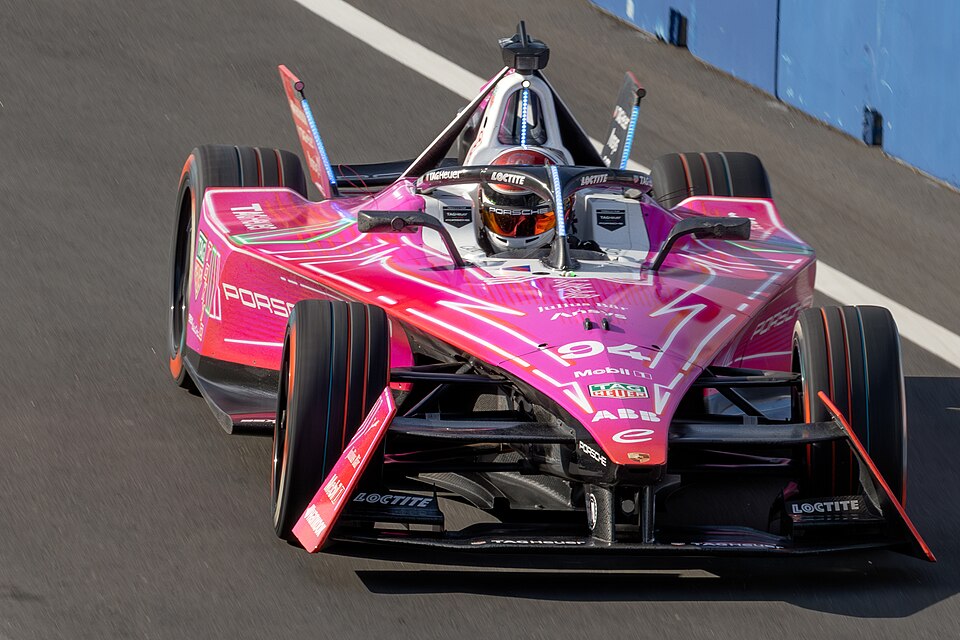
Formula E is poised to adjust its sporting regulations for the upcoming 2025/26 season, with key changes aimed at making its complex race formats easier for fans to follow. The most significant proposal involves reducing the number of Attack Mode activations during races that feature the new fast-charging pitstops.
Last season saw the introduction of “Pit Boost,” a mandatory fast-charging stop that adds 10% of usable energy back into the car. However, when combined with the existing two mandatory Attack Mode activations—which require drivers to go off-line to gain a temporary 50kW power boost—many within the paddock felt the strategic elements became overly complicated and chaotic for viewers.
In response, the FIA and Formula E are now considering a new framework where races featuring a Pit Boost stop will only require a single Attack Mode activation. Standard, single-race events without a charging pitstop would likely retain the current two-activation format.
The proposal has been met with a generally positive reception from the teams. Drivers, however, have offered mixed views.
“It can be a good move because it will be decided more on merit, [and] the races will tend to be less chaotic,” said DS Penske driver Maximilian Günther, who supports the change. He believes it would also “reduce the chances of getting lucky/unlucky with a safety car.”
Current series champion Oliver Rowland was less convinced, suggesting the tweak “doesn’t change much.” In his view, the series should focus on “making it better on TV.”
In a separate but related change, officials are also looking to amend the rule that penalises drivers who fail to use their full Attack Mode allocation before the end of a race.
This issue came to a head at the Homestead E-Prix last season, where a late red flag left several drivers with unused Attack Mode time. Norman Nato, who crossed the line first, was demoted to sixth place after a post-race penalty for not completing his required activation time.
The proposed change would remove this penalty, with the logic being that the inherent disadvantage of not having the extra power is punishment enough.
“Making it non-compulsory to take the attack modes is a good thing,” argued Rowland. “It’s already a disadvantage not to take it, so you shouldn’t be penalised as well.”
While the idea has support, some teams have reportedly raised concerns that it could lead to predictable strategies, with drivers potentially waiting until the final lap to trigger their power boost.
The proposed changes have been discussed within the Sporting Working Group and are due to be reviewed by the FIA Formula E Commission this week. If approved, they are expected to be formally ratified by the World Motor Sport Council next month.