
Formula 1 has entered what it is calling, with no small amount of justification, the biggest regulatory overhaul in its history. New cars. New engines. New aerodynamics. New teams. New manufacturers. New rules for overtaking. Even a new fuel. If you’re feeling slightly overwhelmed by the scale of it all, you’re not alone. As Ferrari team principal Frédéric Vasseur put it: “The biggest challenge is probably that we are starting from scratch on everything, new tyres, new fuel, new engine, new chassis, new sporting regulations, new everything.
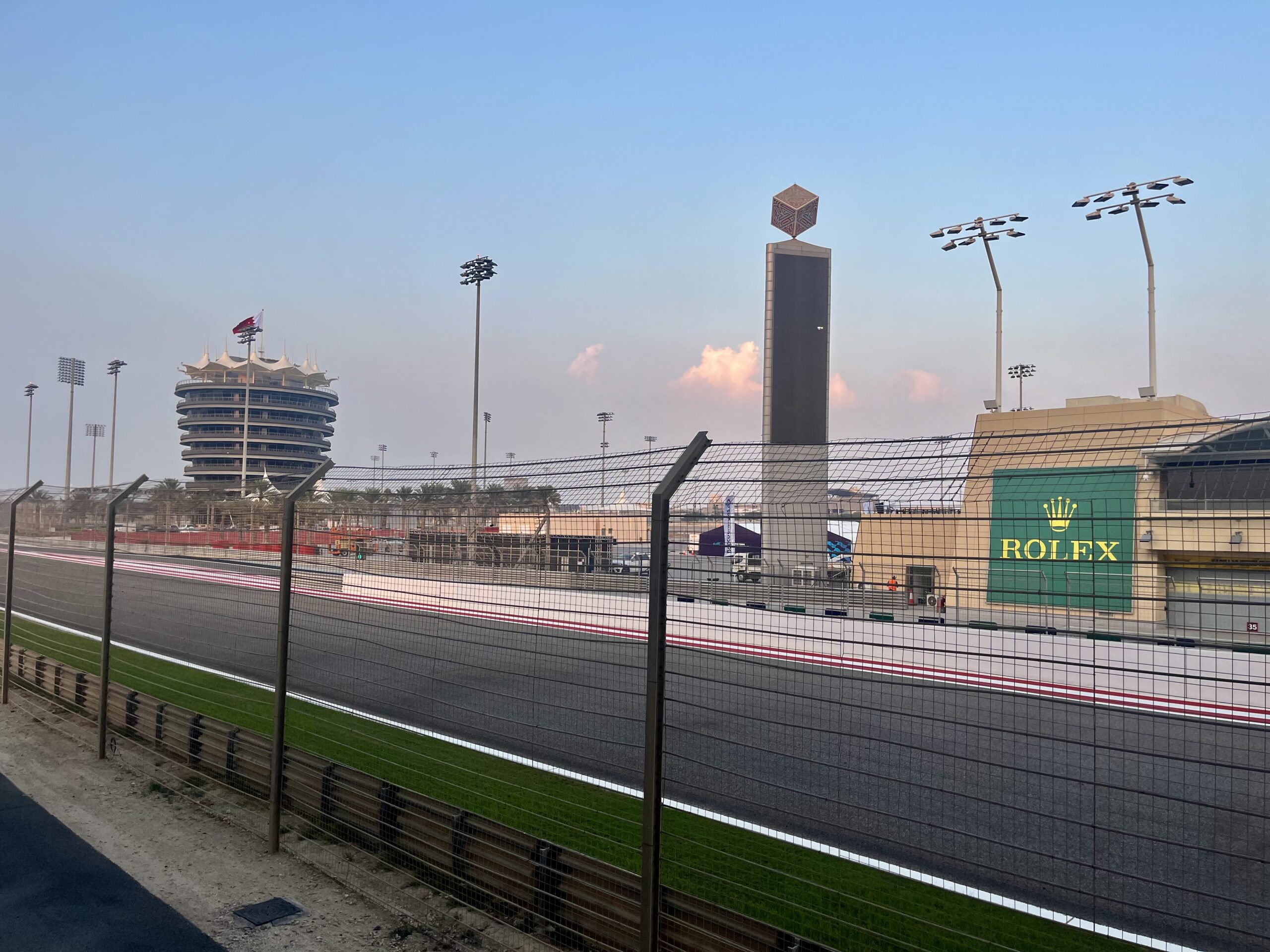
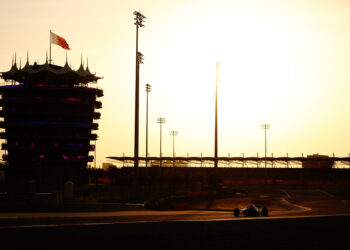
The second Bahrain pre-season test begins this week, so there’s no better time to take stock of everything that has changed and what it means for the season ahead. Here is your complete guide to the new era.
Why change everything at once?
The 2022–2025 cycle of regulations was itself a significant reset, a ground-effect aerodynamic era designed to improve racing by reducing the dirty air that made following so difficult. It achieved that to a degree, but it also produced cars that were enormous, heavy and expensive. By 2025, the minimum car weight had crept up to around 800kg, compared to roughly 600kg in the early 2000s. The cars were visually imposing and technically brilliant, but they had grown ungainly.
Meanwhile, the power unit formula, a 1.6-litre turbocharged V6 hybrid, had been in place since 2014, making it one of the longest-running engine regulations in the sport’s modern history. It had produced the most reliable, most fuel-efficient, and arguably fastest cars F1 had ever seen. But it had also produced the MGU-H: a heat energy recovery system so complex and expensive that no road car manufacturer had ever adopted it. That complexity was becoming a barrier to entry rather than a showcase for relevant technology.
The FIA and Formula 1 decided to tackle both issues simultaneously in 2026, a once-in-a-generation synchronisation of chassis and power unit rule changes. The result is a completely new car concept, and one that arrives with a grid of 11 teams and five engine manufacturers, the most competitive supplier landscape the sport has seen in years.
The new cars: Smaller, lighter, nimbler
The most immediately visible change is that the 2026 cars are simply smaller. The wheelbase has been cut by 200mm to 3,400mm, while the overall width drops 100mm to 1,900mm. The floor width has been reduced by 150mm, and the minimum weight falls by 30kg to 770kg, reversing a trend of ever-heavier machinery that had accumulated across two decades.
For context, a 30kg reduction is the equivalent of stripping out half a grown adult’s worth of mass from the car. Combined with narrower tyres, the front 25mm narrower, the rears 30mm, though both retain the 18-inch rim diameter introduced in 2022, the 2026 cars should feel genuinely more agile and responsive, particularly through slower corners where a shorter wheelbase aids turn-in response.
The FIA describes this as the “nimble car” concept, a deliberate attempt to make the machines feel more like pure racing cars, easier to place on track and more rewarding to drive. Seven-time world champion Lewis Hamilton, now at Ferrari, captured what this means from a driver’s perspective: “The 2026 season represents a huge challenge for everyone, probably the biggest regulation change I have experienced in my career. It will be an extremely important year from a technical perspective, with the driver playing a central role in energy management.”
Reducing the size has created its own engineering headaches, of course. McLaren’s chief designer, Rob Marshall, explained that packaging radiators, electrical boxes and other systems into a considerably shorter car was “very difficult”, adding to the already substantial challenge of designing a brand new car around a brand new set of regulations.
The aerodynamics revolution
The 2022 generation of cars was defined by its large underfloor tunnels, long venturi channels that generated enormous quantities of downforce through ground effect. Teams spent millions understanding and optimising those tunnels. From 2026, they are gone. The floor is now flatter, with extended diffusers featuring bigger openings to compensate, but the fundamental approach has changed. Overall, downforce is reduced by somewhere between 15 and 30 per cent, while drag falls by an estimated 40 to 55 per cent.
The front wing is narrower, down 100mm, with fewer elements but more freedom for development at its outer sections, which promises to be a fertile battleground between teams. The rear beam wing, a small horizontal element beneath the main rear wing, has also been deleted to reduce drag. Front wheel arches are gone too. In their place, in-washing wheel-wake control boards sit at the front of the sidepod, a specific design decision aimed at solving a problem that has plagued F1 for decades.
The dirty air problem (and an attempt to solve it)
For years, F1 has wrestled with the physics of turbulent air. A car moving at racing speed punches a large hole in the airflow behind it, and that disturbed air makes it extremely difficult for a following car to generate the downforce it needs to stay close. The more sophisticated the aerodynamic package, the worse the effect, which is why the most technically advanced F1 eras have often produced the most processional racing.
The 2026 regulations take a different approach to the problem compared to their predecessors. The FIA predicts that a following car will maintain 80 per cent of its downforce at 10 metres, roughly one car length, and 90 per cent at 20 metres. The simpler front wings and in-washing bargeboards are specifically designed to prevent the out-washing of dirty air that makes following so difficult. Whether reality matches the simulation remains to be seen, but the principle is sound.
Active Aerodynamics: The biggest change you’ll see from the grandstand
Here is where 2026 truly breaks with the past. For the first time, F1 cars will feature fully active aerodynamics — movable front and rear wings that automatically adjust their angle depending on where the car is on the circuit.
In what the sport is calling “Corner Mode,” the wing flaps remain in their default closed position, maintaining high downforce for grip. On designated straights, drivers can activate “Straight Mode,” opening the flaps to flatten the wings, slashing drag and boosting top speed. Crucially, this is available to every driver on every lap, with no requirement to be within a certain gap of the car ahead, unlike the old DRS system it replaces.
DRS, which stood for Drag Reduction System, was introduced in 2011 as a tool to aid overtaking. Drivers could only open their rear wing if they were within one second of the car in front at a detection point. Active Aero is fundamentally different in philosophy: it is primarily a performance tool available to all, with multiple activation zones per circuit rather than DRS’s typically one or two.
The front wing moves in harmony with the rear, a coordinated system keyed to the engine mapping, to better balance the car through each phase of the lap. This coordination between front and rear represents a genuine step forward in on-the-fly aerodynamic management.
The jargon guide
With new systems comes new terminology. Here is what you’ll be hearing at every race in 2026:
Active Aero / Straight Mode / Corner Mode: The movable wing system described above. Corner Mode = high downforce. Straight Mode = low drag.
Boost Button: Formerly the equivalent of the energy deployment button drivers have used for years to trigger maximum power from the hybrid system. In 2026, this can be used offensively or defensively at any point on the lap, providing the battery has sufficient charge.
Overtake Mode: This replaces DRS’s role as a proximity-based overtaking tool. When a driver is within one second of the car ahead at a designated detection point, they can access extra electrical energy, an additional 0.5 megajoules, allowing them to sustain a higher speed for longer. It can be deployed in one go or spread across a lap. Unlike the old DRS, it gives a burst of extra power rather than simply reducing drag.
Recharge: The process by which drivers recover energy to top up the battery. This happens under braking, when lifting off the throttle, on part-throttle corners, and even, in some engine configurations, while still at full throttle at the end of a straight.
Hazard Lights: A new addition for 2026. Lights mounted in the rear wing endplates and along the side of the car display the car’s ERS (Energy Recovery System) status, giving the following drivers visual information about what the car ahead is doing electronically.
The power unit revolution: 50-50 hybrid
Twelve years is a long time in any technology cycle, and the 2014-spec hybrid power units had reached a remarkable level of sophistication. But the time had come for a change, and the FIA has gone big.
The 2026 power unit retains the 1.6-litre turbocharged V6 as its combustion backbone; this is not a fundamental change of engine architecture. What has changed comprehensively is the hybrid element that surrounds it.
Out: The MGU-H
The MGU-H, or Motor Generator Unit-Heat, was the component linked to the turbocharger that harvested energy from the flow of exhaust gases and converted it into electricity. It was extraordinarily effective — a key reason why the 2014-era power units were so thermally efficient. But it was also enormously complex and expensive, and crucially, the 18 years since it was first conceived in F1 had passed without a single road car manufacturer adopting anything resembling the technology. It lacked road relevance and, in the words of the regulations, represented an unnecessary barrier to entry.
Its removal simplifies the power unit considerably.
In: A much more powerful MGU-K
To compensate for the loss of the MGU-H, the MGU-K, the Motor Generator Unit-Kinetic, which harvests energy under braking, has been dramatically uprated. Its output jumps from 120kW to 350kW, an almost 300 per cent increase in electrical power delivered to the rear wheels. Where the previous generation derived roughly 20 per cent of its total output from electrical energy, the 2026 power unit targets a near-equal split: roughly 50 per cent from the combustion engine and 50 per cent from the electric motor.
Total power output has actually decreased slightly, dropping from around 550-560kW under the old regulations to approximately 400kW in 2026. But that figure should rise considerably as teams develop their cars through the season, and the nature of that power, a much greater proportion of it electrical and therefore available instantly, without the lag of combustion, fundamentally changes how the car performs.
The ERS can now recharge at twice the rate of the previous generation, harvesting energy through braking, throttle lift-off, part-throttle corners and in some cases while still accelerating. Energy management becomes a far more central strategic tool for drivers and teams, contributing to what Hamilton described as the “greater cognitive demands” of the new cars.
Sustainable fuel
For the first time, all F1 cars in 2026 will run on Advanced Sustainable Fuels, a blend made from sources including carbon capture, municipal waste and non-food biomass. The fuel was trialled successfully in F2 and F3 during the 2025 season and is certified to meet strict sustainability standards without any compromise to performance. This forms part of F1’s commitment to reaching net-zero carbon emissions by 2030.
Who’s making the engines?
One of the most compelling stories of 2026 is the engine grid. The new regulations were explicitly designed to attract manufacturers by removing the MGU-H complexity and increasing road relevance, and by that measure, they have been a resounding success.
From four suppliers in 2025, Mercedes, Ferrari, Renault and Honda (technically Red Bull Powertrains-Honda), the field grows to five manufacturers in 2026, and the supplier list has been reshuffled almost entirely.
Mercedes remains the largest supplier, powering their own works team alongside McLaren, Williams and, in a significant change, Alpine, who have dropped their own Renault-badged engine programme in favour of a customer deal.
Ferrari supplies their works team, Haas (who have used Ferrari power since their 2016 debut), and new entrant Cadillac, the American team making their F1 debut in 2026 as the grid’s 11th competitor. Cadillac will use Ferrari engines until at least the end of 2028, when General Motors hopes to have its own power unit ready.
Red Bull Powertrains, in partnership with Ford, supplies both the Red Bull senior team and Racing Bulls. This is a genuinely remarkable development, a constructor building its own power unit for the first time, developed in Milton Keynes with technical input from the American automotive giant. Ford had been absent from F1 as an engine supplier since 2004, and their return marks one of the biggest commercial coups of the new regulatory era.
Honda returns as a full independent manufacturer, supplying Aston Martin exclusively. Honda’s relationship with Red Bull had produced four drivers’ championships, but, having announced their withdrawal at the end of 2021 and then quietly remaining for the 2022-25 transition period, the Japanese manufacturer’s formal return as a fully-fledged works partner with Aston Martin gives them, and the Silverstone team, enormous motivation for 2026.
Audi make their Formula 1 debut, having completed a majority takeover of the Sauber organisation. The German brand is entering at the deep end, supplying only their own team from the first race, with Nico Hülkenberg and Gabriel Bortoleto as their drivers.
The one major departure is Renault. The French manufacturer confirmed in late 2024 that it was withdrawing from F1 as an engine supplier and reallocating its facility at Viry-Châtillon to other projects. It will be the first season without a Renault engine on the grid since 2000.
Safety improvements
No major regulation change comes without enhanced safety provisions, and 2026 is no exception.
The driver’s survival cell faces more rigorous homologation testing than any previous generation. The roll hoop, the structure above the driver’s head designed to protect them in a rollover, must now withstand forces equivalent to a 20G impact, up from 16G. That increase of 25 per cent roughly equates to the rollhoop bearing the weight of nine family cars.
The front impact structure has been redesigned as a two-stage system. This addresses the phenomenon of secondary impacts: it is not uncommon for a car’s nose to crumple and absorb a heavy initial impact as designed, but then for the now-detached structure to spin and strike the barrier again in a secondary collision. The new nose must maintain its protective function even after an initial impact has already damaged its outer sections.
Side intrusion protection has also been strengthened, and the area around both the driver and the fuel cell has received additional protection measures.
The financial dimension: A new cost cap
Building entirely new cars to entirely new regulations is expensive, and the FIA has adjusted the financial framework accordingly. The cost cap introduced in 2021, which sat at $135 million for the 2025 season, has been raised to $215 million to reflect the scale of the 2026 development investment. This is a significant increase, though it still represents a hard ceiling designed to prevent the largest teams from spending limitlessly as they once could.
New and returning engine manufacturers have also received transitional benefits to offset the cost of developing a brand-new power unit from scratch.
What testing has shown us so far
The first Bahrain pre-season test, three days held at the Bahrain International Circuit in the days before this article’s publication, offered the first competitive glimpse of the new cars in action and threw up several early talking points.
Red Bull’s engine impressed everyone. The Red Bull Ford Powertrains unit turned heads with its straight-line energy deployment, and multiple rivals, including Mercedes boss Toto Wolff, cited Red Bull as the early “benchmark” team. The reliability of a brand-new, first-ever Red Bull engine across hundreds of laps was widely praised across the paddock.
Mercedes topped the timesheets but suffered reliability issues. Kimi Antonelli set the overall fastest time of the test with a 1m 33.669s on the final day, and George Russell was second quickest. But the team suffered power unit and suspension problems that cost them valuable mileage early on, Antonelli managing just 33 laps on one day compared to Russell’s 110.
Ferrari gathered mileage with quiet confidence. The Italian team completed 420 laps, third highest among all teams, and Fred Vasseur consistently declined to discuss performance, preferring to focus on data collection. Long-run analysis suggested Ferrari may be faster than their guarded public messaging implies.
Aston Martin had a difficult week. The team that had promised so much heading into 2026, buoyed by Adrian Newey’s arrival and an exclusive Honda engine deal, endured a sobering test. Lance Stroll suggested they faced a deficit of around four and a half seconds to the leading teams, a figure that team representative Pedro de la Rosa did not dispute. Whether this is cause for alarm or simply the reality of an early-development car from a new manufacturer remains to be seen.
Audi impressed for a debut entrant. The German manufacturer ran reliably and collected good mileage, with team boss Mattia Binotto expressing confidence in the direction of development. There remains a curious compression ratio controversy that emerged during the test, with Audi and others questioning whether Mercedes has found a technical advantage in how the engine rules are being interpreted, but the FIA is working to clarify this before the season begins.
McLaren, Williams and Ferrari led the mileage charts. Each team completed over 420 laps, the kind of consistent running that builds the data foundation for a competitive season.
The big questions that remain
Testing has answered some questions and opened others. Here is what the second Bahrain test, beginning this week, needs to clarify:
How competitive is Red Bull’s engine really? The deployment advantage on straights was visible, but how does the full package, chassis and power unit together compare in race trim?
Where does Mercedes truly stand? The fastest lap times at the test came from a Mercedes, but their reliability issues mean they are behind on mileage. A clean second test would tell us a great deal.
Can Aston Martin recover? The gap described by Stroll is too large to overturn in one test week, but the nature of a new regulatory era means the deficit could compress quickly if the team identifies the source of their problems.
Will the active aerodynamics work as advertised in racing conditions? Active Aero and Overtake Mode look compelling on paper, but the real test comes when cars are fighting wheel-to-wheel for position under pressure.
Who benefits most from the pecking order reset? History suggests that regulation changes shake up the grid substantially. Mercedes’ dominance from 2014 lasted until 2020. Red Bull’s 2022 advantage carried through to 2023 before pressure arrived. Whoever gets 2026 right from the start will be well-positioned for the next few seasons.
The bottom line
The 2026 Formula 1 regulations represent an authentic attempt to address several of the sport’s structural challenges simultaneously: making the cars more exciting to watch and drive, bringing the technology back to relevance for road car manufacturers, attracting new entrants to grow the competition, and doing it all in a way that reduces environmental impact.
The cars are smaller, lighter and faster to respond. The power units are simpler, more electrically dominant and run on sustainable fuels. The aerodynamics are genuinely innovative, active systems that adapt in real time rather than static shapes optimised for a single configuration. And the grid has grown to 11 teams, served by five engine manufacturers, some of them among the most recognisable names in automotive history.
The 2026 Formula 1 season begins at the Australian Grand Prix in Melbourne.



Comments 1